
I asked AI to help me find a Christmas gift for my wife. It gave me a candle.
Not just a candle. A candle, a spa day, jewelry and a gift card.
Sound familiar? That's the list everybody gets.
I did this on purpose, in front of a room full of Fishers business owners, at our talk on November 9. Then I asked the exact same AI for the exact same gift a second way, and got something completely different.
Nothing about the AI changed. Only one thing changed.
Why It Gave Me A Candle
Here's the whole question I asked:
"Help me find a Christmas gift for my wife."
One line. That's it.
Now think about what the AI knew after that line. It knew I have a wife. That's all. It didn't know her name, what she loves, what I got her last year, or whether I'm a small-gift guy or a go-big guy.
So it did the only thing it could. It guessed. And when you have to guess about "a wife," you pick the gift that fits every wife a little and no wife a lot.
A candle.
The AI wasn't dumb. I gave it nothing.
Ask for the average gift and you get the average gift.
Same AI, Five Simple Rules
So I asked again. Same AI. But this time I followed five simple rules. They're the difference between something generic and something great.
One. Tell it who it is. "You're a personal shopper who's brilliant at gifts." A personal shopper thinks differently than a search box. You just told it which brain to use.
Two. Give it context. Who it's for. What she loves. Your budget. This is the stuff a smart friend would ask you before giving advice. Give it up front.
Three. Say exactly what you want back. "Five ideas, ranked, with why." Otherwise you get a long paragraph of maybes. Tell it the shape of the answer.
Four. Don't take the first answer. Push for better. The first answer is a draft. Asking again costs you nothing.
Five. When it matters, ask a second AI and compare. Like a second opinion from another doctor. (Remember the blurry photocopy from No. 2? This is how you catch the blur.)
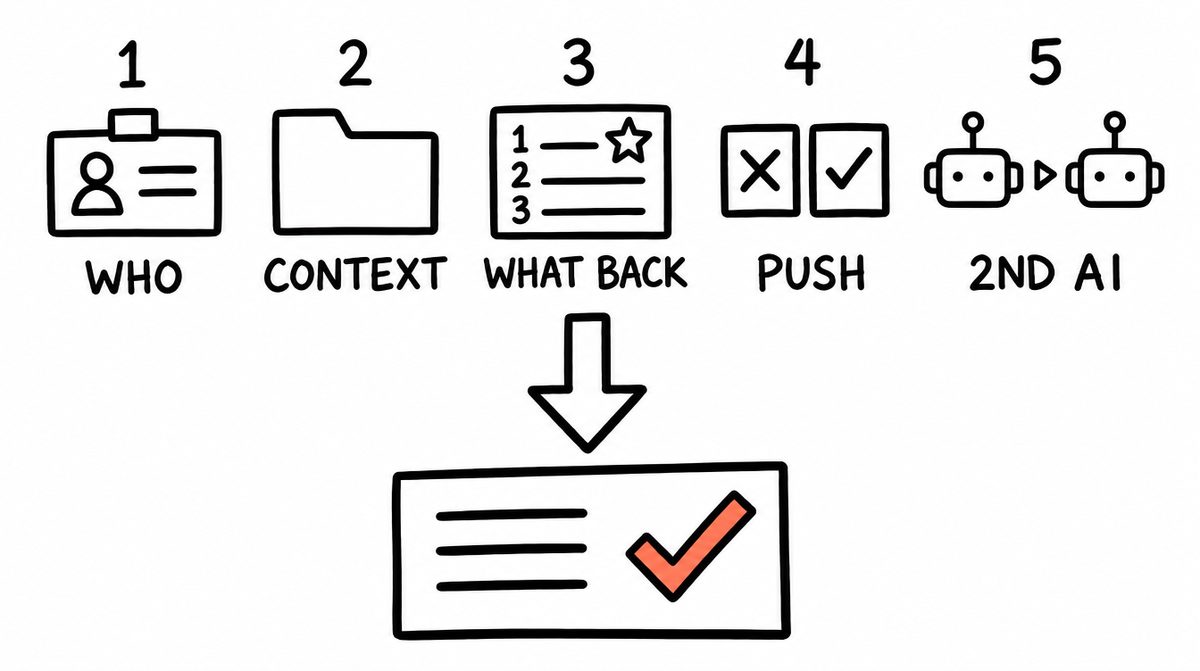
That's it. No code. No special app. Five habits.
Same Gift, All Five Rules
Here's what I said the second time, out loud, one rule at a time:
"You're a personal shopper who's brilliant at gifts."
"My wife Amy loves..." and I named two or three real things she loves. "Last year I got her..." and I told it. "My budget is..." and I gave it a number.
"Give me five ideas, ranked, with one sentence on why each one fits her."
And it came back with a real list. Ranked. Specific. Every idea was about Amy, not about "a wife."
Then I did rule four. I said:
"These are good. Give me five more that are more creative."
And the second list was better than the first.
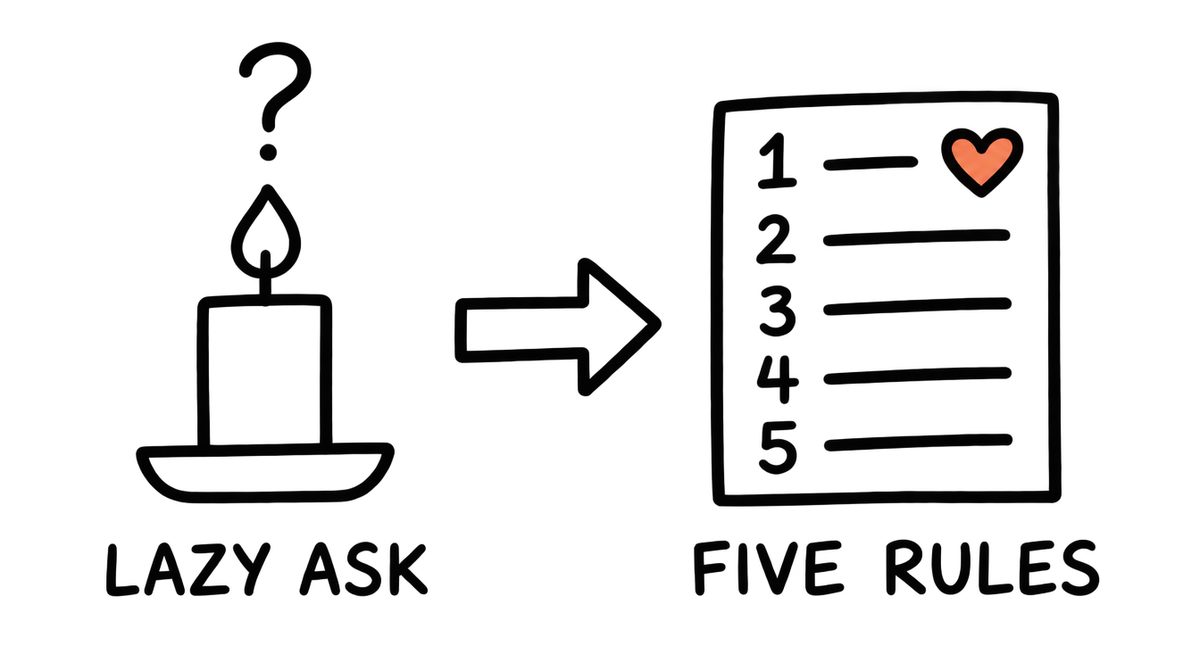
Same AI. All that changed is what I gave it.
Now Do It On Your Business
Gifts are a fun test. But here's where it pays.
Open ChatGPT or Claude and type the lazy version first:
"Write a Facebook post for my business."
Read what you get. It'll be friendly, and fine, and it could be about any business on Earth. That's a candle.
Now do it with the rules:
"I'm a [whatever you do] in Fishers. My best customers are [whoever they are]. They usually worry about [one thing]. Write three short posts in a friendly, plain voice, each ending with one easy next step."
Three minutes. Put them side by side.
The second set sounds like you. It talks about the thing your customers actually lose sleep over. And it tells them what to do next.
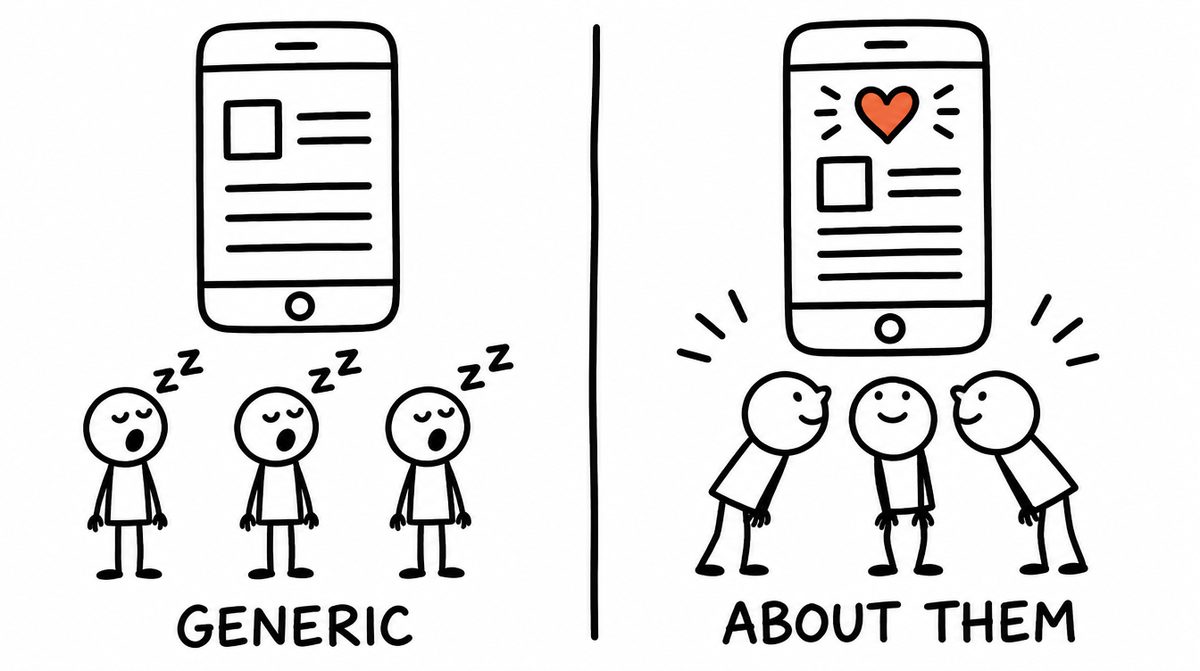
Same AI. All that changed is what you gave it.
Why Two People Get Two Different Things
Here's the part most people miss.
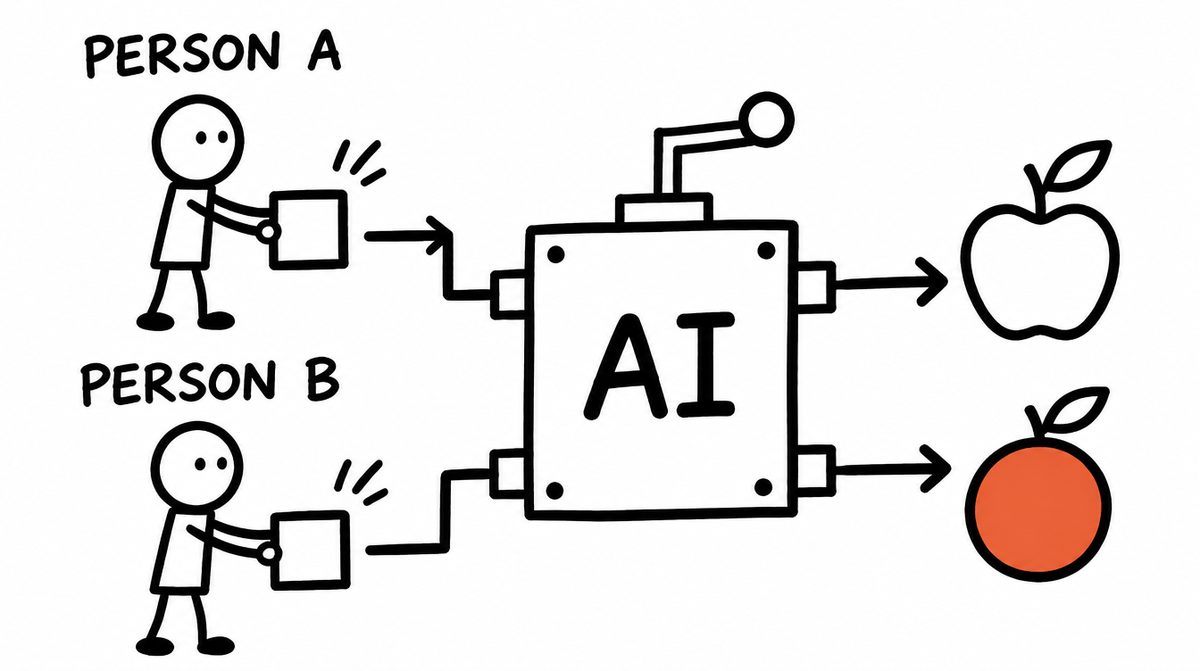
When two different people go to AI, they get two different things.
Person A gets an apple. Person B gets an orange.
Because AI multiplies whatever you bring to it.
Bring it one tired line, and it multiplies one tired line. Bring it who your customers are, what they worry about and how you talk, and it multiplies all of that.
It's not a vending machine where everybody presses B4 and gets the same bag of chips.
The One Thing It Can't Do
So here's the one thing AI can't do for you.
It can't be you.
It can't know what you know. It can't do what you do with your hands, or your eye, or your heart.
If you make things for a living (bread, fences, a great haircut, a back that finally stops hurting), AI doesn't make your work. It takes care of the boring stuff around it. The post. The reply. The follow-up you keep meaning to send.
And that's the best news in this whole article.
Because it means nobody can copy what you bring.
Your competitor can sign up for the same AI tonight. They can't sign up for your years of knowing which customer is about to say yes, or which pipe is about to go.
Same Pencil, Different Hand
Here's how I say it.
Same tool. Different results.
Same pencil. Different hand.
Anybody can pick up a pencil. Not everybody draws the Mona Lisa.
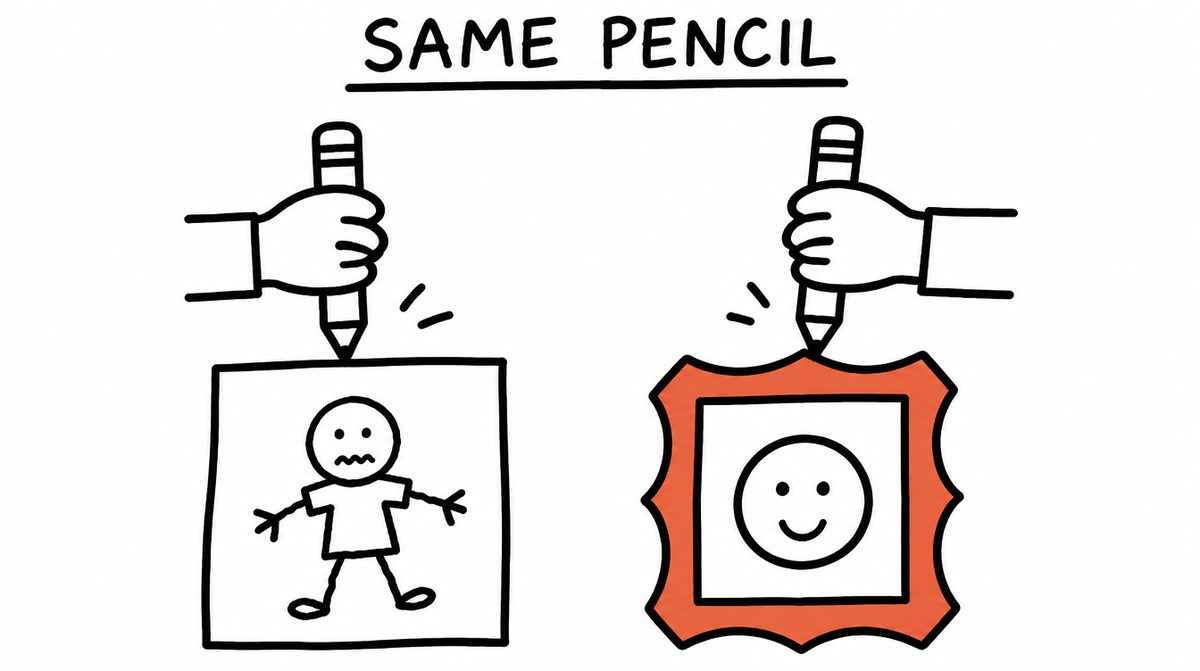
And your hand is good because of everything it's seen.
Mine started in a funny place. In high school, I never fit in. So I bought a book on how to be cool.
(Yes. Really.)
I wanted to know why people do what they do. That book led me to Mark Joyner. Mark Joyner led me to Dan Kennedy. And Dan Kennedy led me to direct response, the science of what makes a person say yes.
That's my hand. I know people.
You have your own version of that book. The thing you've done ten thousand times. The thing a new hire takes a year to learn. That's your hand.
The five rules are just how you get your hand onto the pencil.
Steal This
The Five Rules, Fill-In Version
Copy this. Fill in the brackets. Say it out loud or paste it into ChatGPT or Claude tonight.
1. Who it is: "You're a [the expert you wish you had: personal shopper, ad writer, office manager] who's brilliant at [the job]."
2. Context: "Here's my situation: [who it's for], [what they love or worry about], [what I've tried before], [my budget or limit]."
3. What I want back: "Give me [five] ideas, ranked, with one sentence on why each one fits."
4. Push: When it answers, say: "These are good. Give me [five] more that are more [creative / specific / like how I really talk]." Then double-check anything it states as a fact.
5. Second opinion (when it matters): Paste the answer into a second AI and say: "Here's what another AI told me. What's wrong or missing?"
So, About That Candle
Same AI. Same pencil. Same Christmas.
This year, no candle.
(Unless she really loves candles. Then rule two would have told it that.)
If this one clicked and you want the five rules written out for your business, brackets already filled in, text the word GENIE to (317) 751-2693. Or grab 15 minutes with me at 2guysandagenie.com/book.
Next up: No. 4, "Einstein in the Basement." Why almost everyone is using the most powerful tool ever built to look up chicken recipes.