
The most expensive question in your business is only three words long.
"Yes or no?"
You probably asked it this week. You didn't say it out loud. You didn't have to. It was printed on your estimate.
A Totally Normal Fence Estimate
My friend Jamon runs a handyman and fence business called Gotta Call Jack. He's good. People love him.
Here's a real estimate he gave a customer for a fence.
Labor. Materials. Removal. Permits.
Total: seven thousand dollars.
One job. One price.
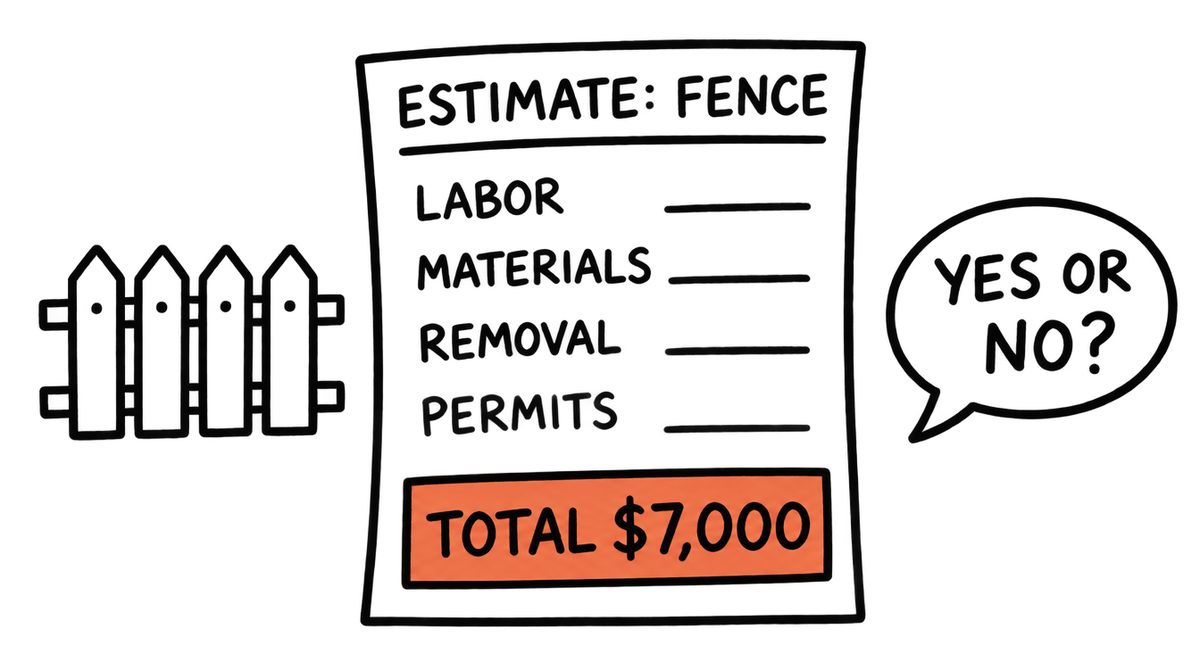
Looks pretty normal, right? It's what every estimate in America looks like. It's probably what yours looks like.
Now look at it from the customer's side of the kitchen table.
They have exactly two choices. Yes, or no.
And "no" doesn't mean "no fence." It means "let me get a couple more quotes." With one price, the customer isn't comparing your options. They're comparing you to the next guy.
Remember DVD Players?
Here's something marketers know that most of us never learned.
A researcher named Daniel Mochon ran a famous test (it was published in the Journal of Consumer Research in 2013). Picture one DVD player on a shelf, all by itself.
Only about ten out of a hundred people said they'd buy it.
Then he put a second DVD player right next to it.
Sixty-six out of a hundred said they'd buy one.
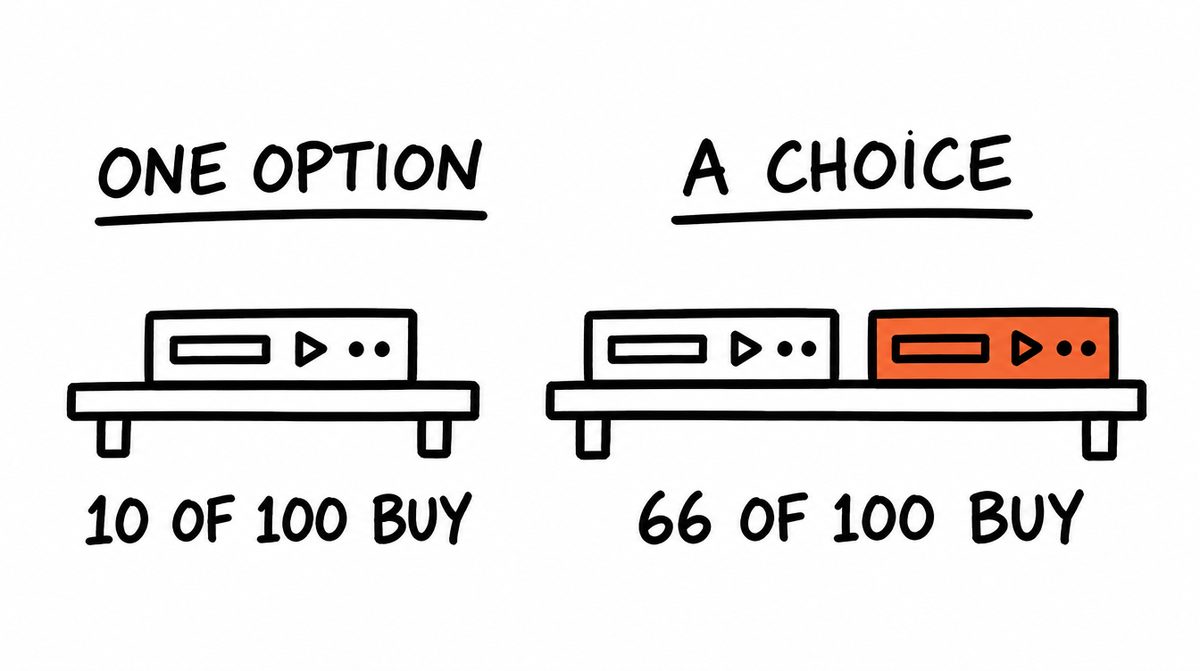
Same shelf. Same kind of product. The only thing that changed: people got a choice.
Why? Because when there's only one option, your brain gets suspicious. "Is this a good deal? I don't know. I should shop around." When there are two, your brain gets busy with a different question: "Which one is right for me?"
Jamon's estimate? One option. Yes or no.
So We Gave The Fence Three Options
Same fence job. Same yard. Same Jamon. But instead of one price, three:
Essentials. Five thousand.
Recommended. Seven thousand.
Showstopper. Ten thousand five hundred.
Good. Better. Best.
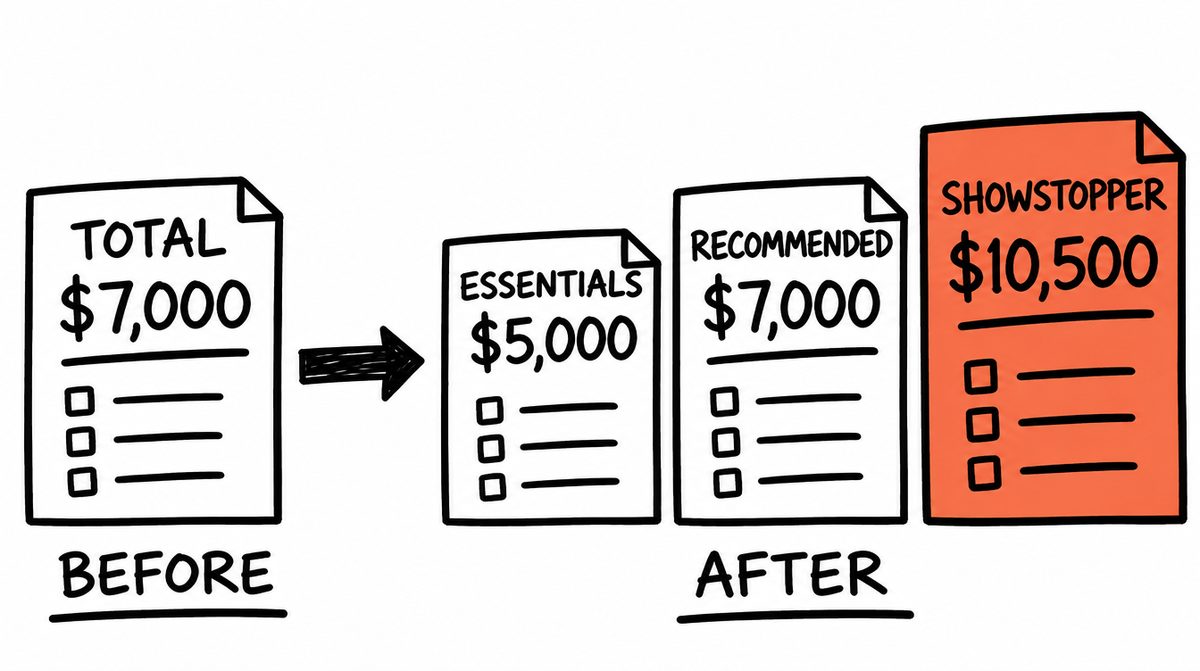
(Your numbers will be your numbers.)
And here's a thing you'll see the first time you try this: some people look at the list and say, "I'm the kind of person who wants the best." And they pick it. Nobody pushed. They just finally had something to pick.
The Part That Surprises Everybody
You'd think the point of three options is getting more per job. That's nice. But that's not the big one.
The big one is that more people say yes.
Because the question changes. It's not "yes or no?" anymore.
It's "which one?"
And when people are busy picking which one, they're not walking away to call the next guy.
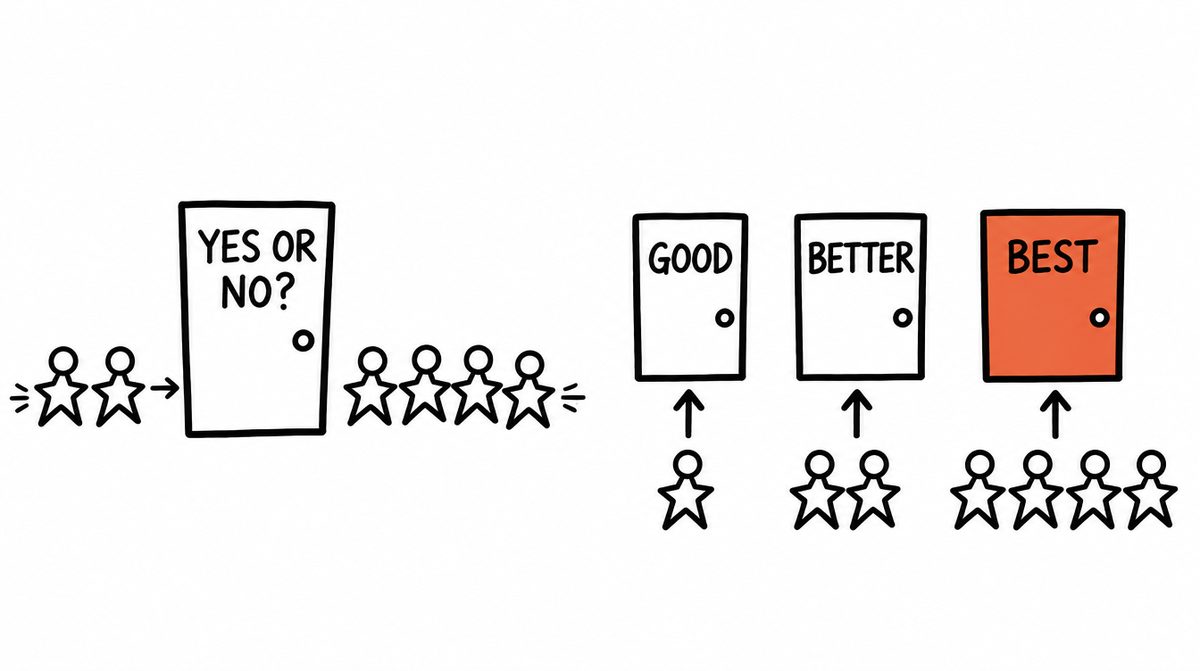
Every owner thinks one clean price is simpler. And it is.
For the owner.
"Great, Jimmy. Who Has Time To Write Three Estimates?"
Fair. You're standing in somebody's driveway. You've got three more stops today. Writing one estimate is already the job you do at 10 PM at the kitchen table.
This is where AI comes in. And you don't type anything.
Say you just walked a three-bedroom rental for an investor. Before you even open the truck door, you hold up your phone, tap the microphone in ChatGPT or Claude, and just talk:
"I just walked a three-bed rental. Kitchen faucet drips. Old water stain in the hall ceiling. Carpet worn in two bedrooms. Paint peeling on the north side."
Then you say one more line:
"Turn this into three options, good, better, best, with a price for each, and write a short text I can send the investor."
That's it. Sixty seconds of talking.
And before you get back in the truck, there's an estimate with three options and a text ready to send.
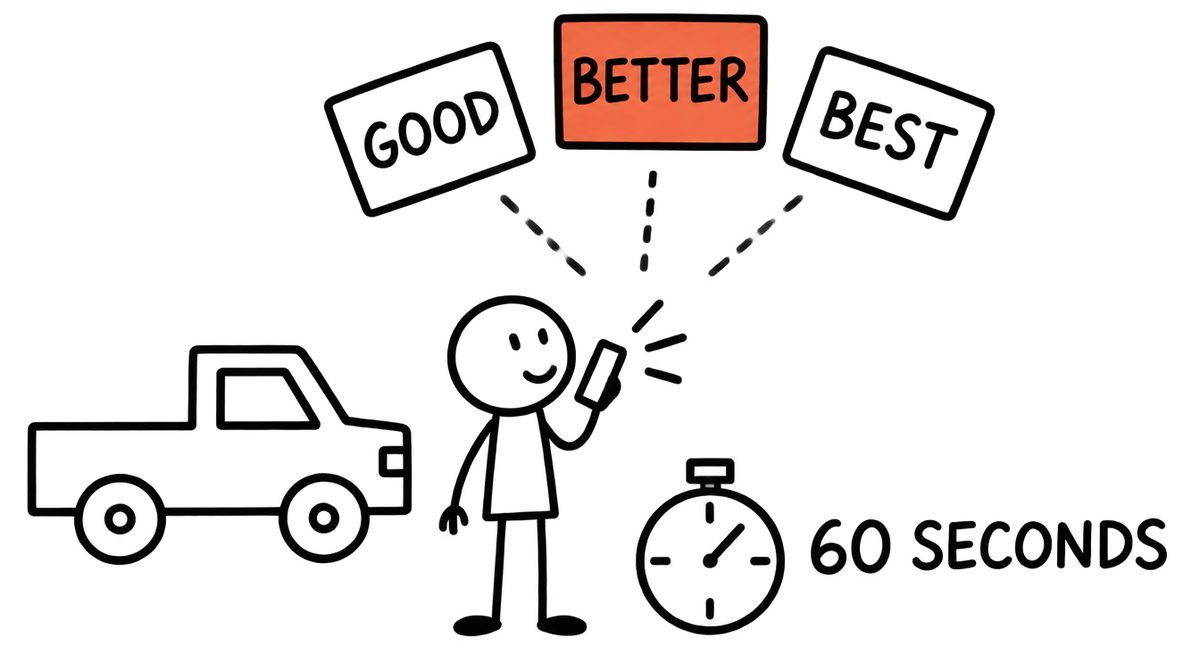
One honest note: the AI has never seen your price sheet. (We call AI the genie. It knows the whole world, but it has never been inside your shop.) So give it your numbers ("my labor is _ an hour, carpet runs about _ a room"), or fix the prices yourself before you hit send. The genie grants. You decide.
Steal This
Steal this: the three-options voice memo
Next time you finish looking at a job, tap the microphone and say:
"Here's the job I just looked at: [talk it through, everything you saw, as messy as you like]. Turn this into three options, good, better, best. Use my prices: [your labor rate, your usual materials costs]. Give each option a name a customer would get excited about, a price, and two lines on what's included. Then write a short, friendly text I can send the customer."
Read it. Fix anything that's off. Send.
Ninja Tip: It's A People-Pleaser
Now you've got three shiny options. So you ask the AI, "Are these good?"
And it says something like, "These are fantastic options! Your customers will love them!"
Of course it does.
Remember the blurry photocopy back in No. 2? AI can sound completely sure and still be wrong. Here's the other half of that: AI is a people-pleaser. It wants you to like it. So it'll tell you your idea is great.
When you want the truth, tell it to be tough:
"Be brutally honest. What would a skeptical customer hate about this?"
Now you'll hear it. The Showstopper sounds like an upsell. The Essentials option looks so bare it makes you look cheap. The text is too long. Good. Better to hear that from your phone than from a customer who never calls back.
Then Practice The Hard Customer
That gave me an idea, and it's my favorite one in this whole article.
Every one of us has a conversation we dread. The price shopper. The "let me think about it."
So let the AI play that customer. Out loud. As tough as you want.
Paste this in, then tap the voice button so you can talk back and forth, and put it on speaker (I borrowed this exercise from Ethan Mollick, who writes about AI):
"You'll play a potential customer of my business. I'm a _. You're interested but skeptical, and you think I'm too expensive. Push back hard, raise real objections about price, timing and trust, and don't agree with me unless I earn it. Ask one thing at a time and wait for my answer. When I say 'grade me,' stop and tell me what I did well, what to fix, and the one sentence I should have said."
Go back and forth for a couple of minutes. Sweat a little. Then say "grade me."
It tells you what you did well, what to fix, and the one sentence you should have said.
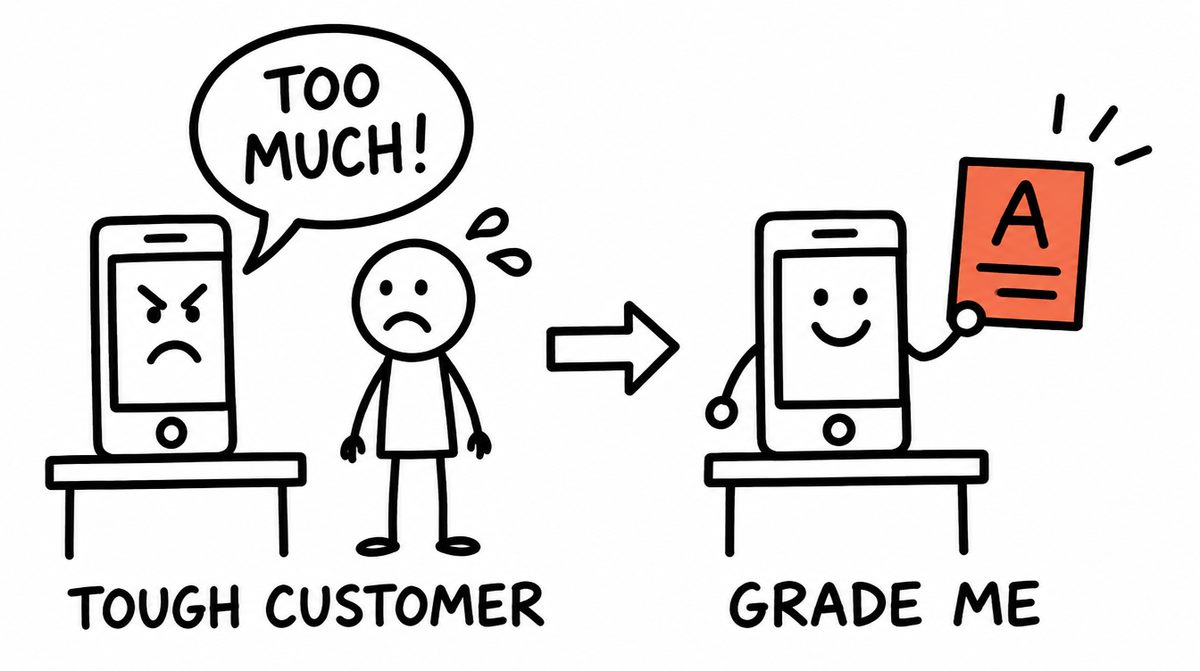
That one sentence is gold. Write it on a sticky note and put it on your dashboard.
You can do this every night before a big sales call. It never gets tired, and it never judges you.
Back To The Fence
So here's the fence estimate again.
Same fence. Same yard. Same Jamon.
The only thing that changed is the question at the bottom. It used to say "yes or no?" Now it says "which one?"
And that one little change is a reminder of something most owners never quite believe: every customer is worth way more than you think.
Yes or no is the wrong question. "Which one?" is the right one, and AI can write it for you before you reach the truck.
If this one clicked and you want three options built for the job you quote most, grab 15 minutes with me at 2guysandagenie.com/book. Or text the word GENIE to (317) 751-2693 and tell me what you sell.
Next up: No. 7, "The Job You Hate, Gone for Good." The one chore that sits in your stomach all day, and how to never type it again.