
It's ten o'clock at night. The kids are asleep. And you're at the kitchen table typing up an estimate.
You've been in the field since seven. You're tired. You've typed this same estimate, with different numbers, about four hundred times.
And it's not even the hardest part of your day. It's just the part that sits in your stomach.
Everybody has one of those.
Daegan Paid Someone To Read His Email
My partner Daegan is one of the smartest business guys I know.
Back when his business was doing a lot of sales, he paid someone a full salary to handle his customer emails.
Part of that is just the job. Lots of sales means lots of customer service.
But part of it was a shield. Some of those emails got nasty. Reading them knocked him off his game, and his whole job was to stay up and keep the momentum going.
That's not weakness. That's an entrepreneur protecting the one thing the business runs on. And honestly? I get it. I've got a couple of jobs like that myself.
Now, you might not have that exact one. But before our Nov 9 talk in Fishers, we asked the owners who were coming which job they hated most. Here's what they told us:
- The appointment you set by phone, six times a day.
- The same "here's what happens next" email, for the fortieth time.
- The estimate you type up at ten o'clock at night, after a long day in the field.
- The invoice you chase for the third time.
- The bills. The checks.
That thing that sits in your stomach all day.
Look Closer At That List
Back in No. 1, I told you about the Tetris effect. Play enough Tetris and you start seeing falling blocks everywhere. Use AI enough and you start seeing chores as blocks, each one with a spot it fits.
So look at that list like a Tetris player.
Most of those aren't hard. They're the same words, over and over.
The "here's what happens next" email doesn't change much from customer to customer. Neither does the appointment reminder. Neither does the third nudge about the invoice.
What wears you out isn't thinking. It's retyping.
And retyping is exactly the block AI fits.
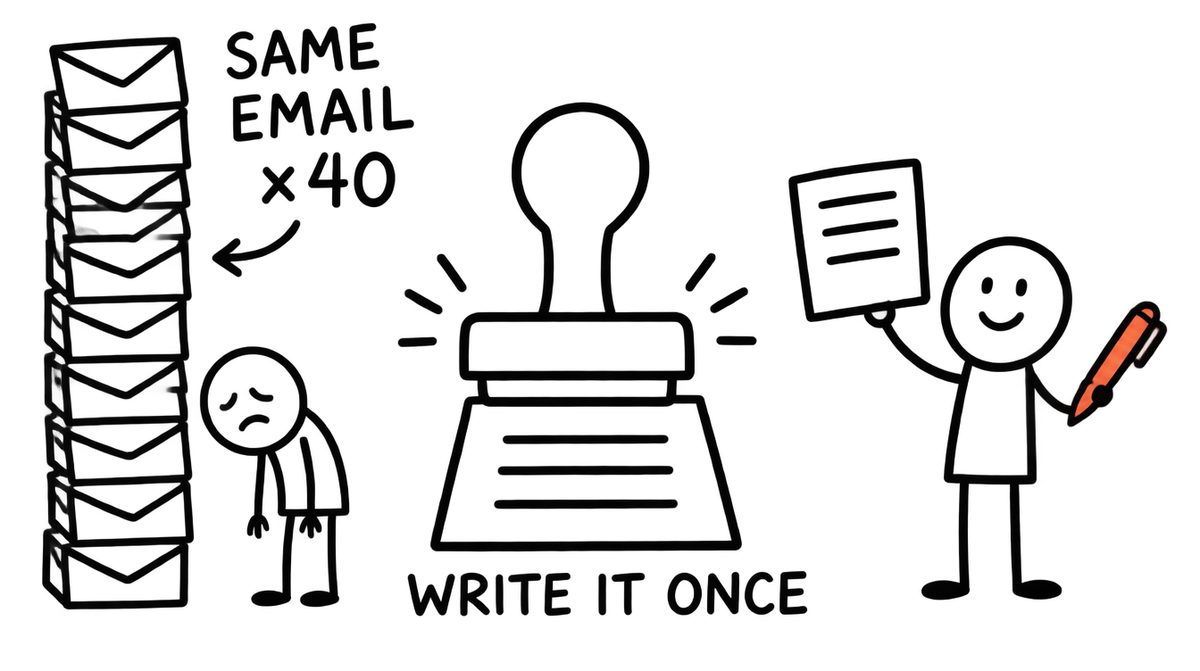
Write It Once
Here's one I showed at the talk.
An attorney told us that client communication eats her week. She's an attorney, so this has to be done carefully. No client information goes in. None.
So I didn't ask AI about any client. I asked it for the email every new client gets. Here's what I typed:
"Write the email every new estate-planning client gets in their first week. What happens next, what to bring, how long it takes, how billing works. Warm and plain English. Ask me any questions you need first."
It asked a few questions first. We answered them out loud. Then it wrote the email.
That's the email every new client could get. Written once. She reads it, fixes what she'd say differently, and now it goes out every time.
Notice who did what.
The AI wrote the parts that never change: what to bring, what happens next, how long it takes.
She decided whether it was right. She still decides what's different about each client.
AI writes the repeated words. You keep the judgment.
And if she already uses client-management software (a lot of law offices do), she pastes that email in once and it goes out on its own. She never types it again.
Steal This
Write your "fortieth email" once, tonight.
Open ChatGPT or Claude, tap the microphone, and say:
"Write the email every new [customer / patient / client] gets in their first week with me. What happens next, what to bring, how long it takes, how payment works. Warm and plain English. Ask me any questions you need first."
Answer its questions out loud. Read what it writes. Fix anything that doesn't sound like you. Save it.
One rule: no customer names, no account numbers. You don't need them.
Fast Beats Perfect
Now here's why those repeated words matter more than you think. It's not only your evenings. It's your customers.
Here's a number I can't get over.
Answer a new inquiry within an hour, and you're nearly seven times as likely to have a real conversation with that person.
And how fast does the average business really answer?
Forty-two hours.
(Both numbers are from a 2011 Harvard Business Review study of over a million sales leads and about 2,200 companies.)
Forty-two hours isn't "I'll call you after lunch." It's "I'll call you the day after tomorrow." By then, they've called the next guy.
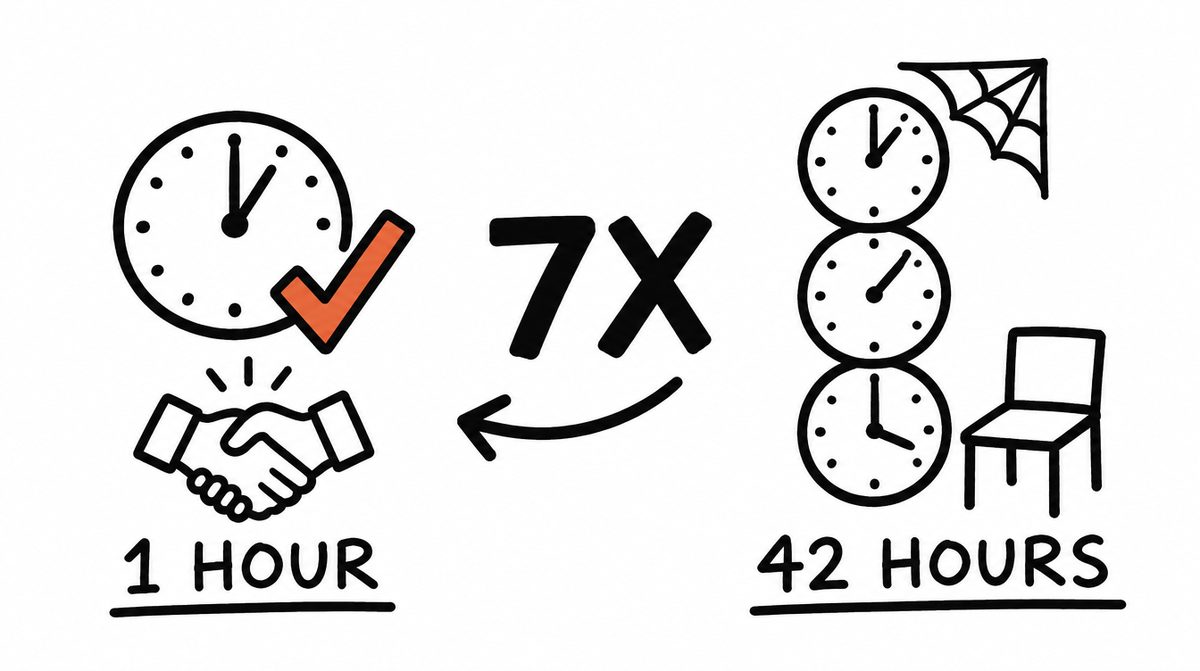
So the first reply doesn't need to be beautiful. It needs to be fast. And it's hard to be fast when you're typing every word from scratch at ten o'clock at night.
The First Reply Is Just The Start
Some of you already have something that answers the first message. Great.
But the first reply is where most of the work starts, not where it ends.
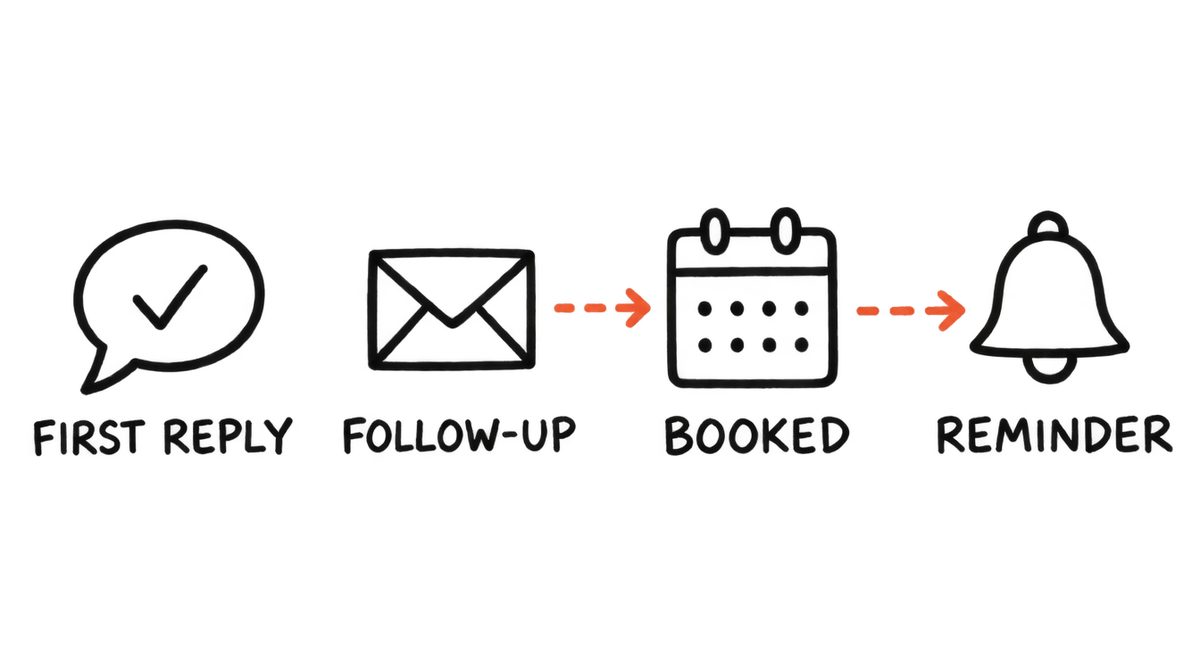
After that comes the follow-up when they go quiet. The back-and-forth to get them on the calendar. The reminder the day before, so they actually show up.
Every one of those is the same words again. Every one of those is a block with a spot it fits.
That's where you get your time back.
Now Picture A Pizza Shop On A Friday Night
Email is one thing. Let's go one step further. The phone.
Picture a pizza shop. Friday night. Saturday lunch. You call, and it goes to voicemail.
And it's not because the owner doesn't care. He's right there behind the counter. Slammed. Making pizzas, taking cash, doing everything himself.
How many calls go to voicemail in a month at a place like that? Most owners have no idea.
Do you know how many went to voicemail at your place last month?
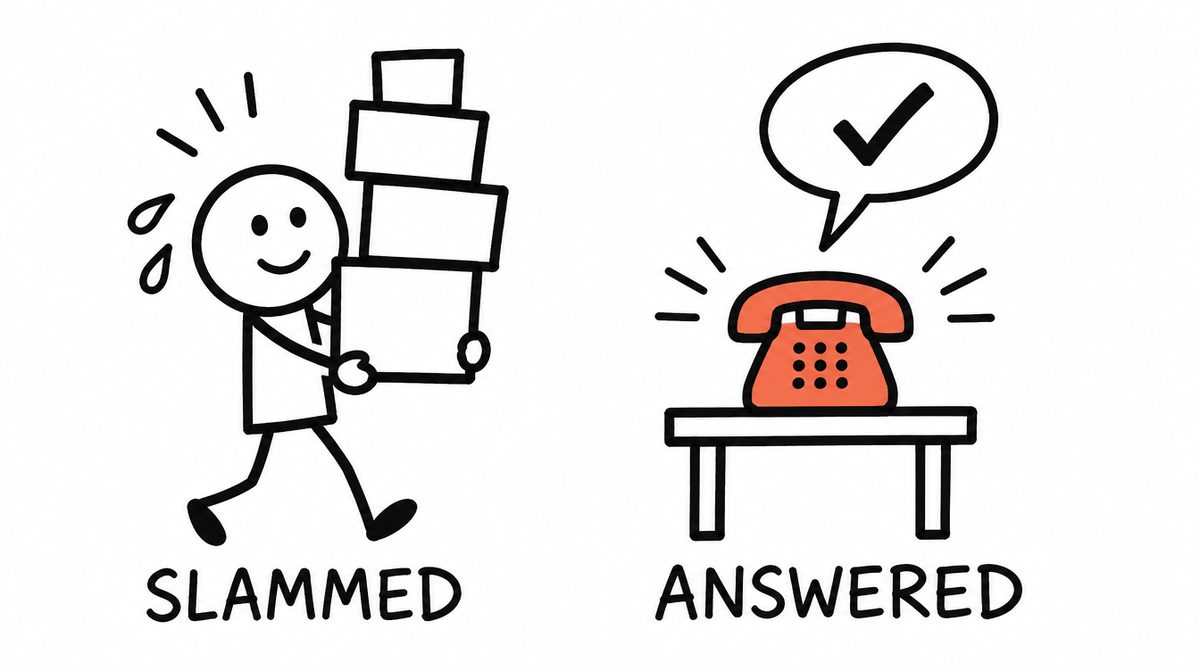
So we built a demo. An AI that answers the phone for a pizza shop.
At the talk, I called it on speaker in front of the whole room. It picked up as the pizza shop. It knew the menu, the prices, the specials. It sounded like the place. It took an order.
It took us about a day to build. And it would answer every call, day or night.
Now, you might be thinking, "My customers would hate talking to a robot."
Fair. But a caller who gets a friendly answer at 7 p.m. is a lot happier than one who gets your voicemail.
Five Phone Calls
Here's a test I love. This week, pretend you're a customer and call five of your competitors. Count how many pick up. Then count how many call you back.
It's not that they're lazy. They're on a ladder, in a meeting, with a client in the chair. Slammed, like the pizza guy.
Now flip it around. If you were the one who always answered, you'd be the easy choice in a town full of voicemail.
Gone For Good
Let's go back to that kitchen table.
Ten o'clock at night. Same table. Same tired you.
Except the "what happens next" email went out on its own this afternoon. The reminders went out yesterday. The estimate? You talked through it for a minute in the truck, and it was waiting for you, ready to read and fix. And the phone that rang at dinner got answered.
You still made every call that needed you. You still kept the judgment.
You just stopped retyping your own life.
That one job you hate? Gone for good.
But hang on. Something in this article should be bugging you.
This whole time, I've told you AI is something you talk to. You ask, it writes back. It's a chat.
So how did a chat just pick up a ringing phone and take a pizza order?
Wait. How does a chatbot answer a phone?
That's the next one.
Tell me the one job you hate. Text the word GENIE to (317) 751-2693, or grab 15 minutes with me at 2guysandagenie.com/book, and we'll look at it together.
Next up: No. 8, "Then We Gave It Hands."