
Last time I left you with a pizza shop phone ringing on a Friday night, and a question: how does a chatbot answer a phone?
Here's the honest answer.
It doesn't. A chatbot can't pick up a phone.
But something else can. And it got here in three steps, in about three years.
It learned to talk. Then it learned to think. Then we gave it hands.
Stay with me. No tech required.
First, The Sleepiest Paper In History
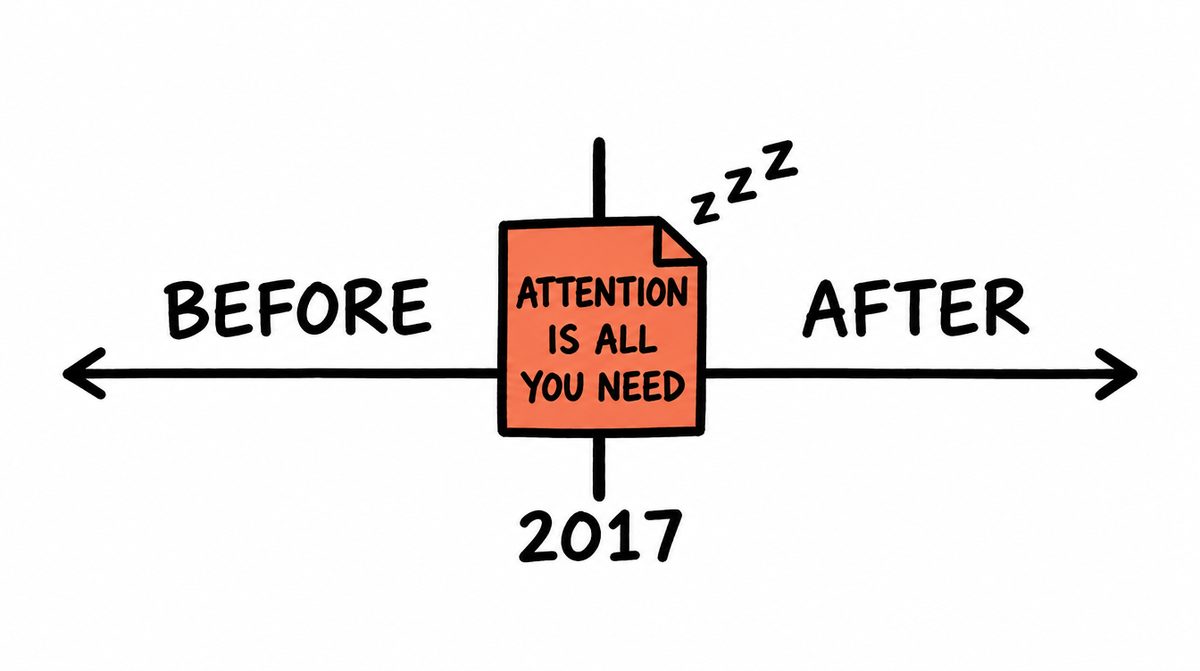
In 2017, eight researchers at Google published a paper with the sleepiest title you've ever heard: "Attention Is All You Need."
Don't look it up unless you're having trouble sleeping.
But that paper is the T in ChatGPT. (What the T stands for? You'll never need it.)
You don't need to know how it works. You only need to know this: it's like B.C. and A.D. There's AI before that paper, and AI after it.
Step One: It Learned To Talk
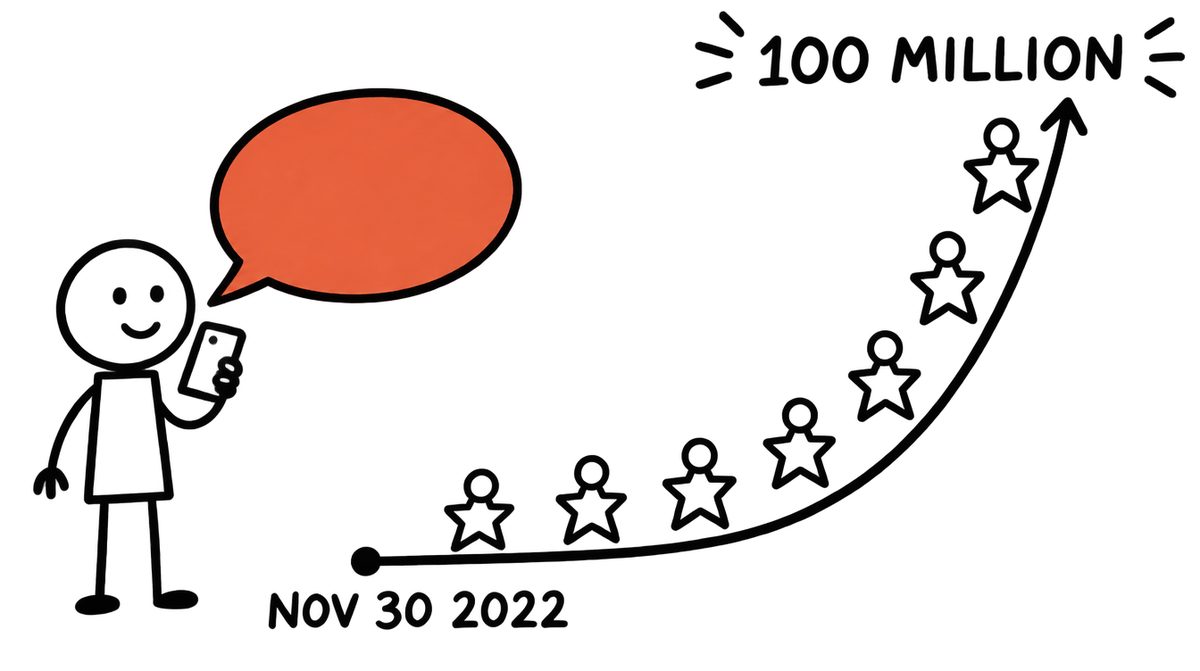
November 30th, 2022. ChatGPT comes out.
And for the first time, regular people could just talk to it. In plain English. No code.
About a hundred million people were using it within two months (that's a UBS estimate, reported by Reuters). At the time, nothing had ever grown that fast.
That's the first half of the Colts story from No. 1. I talked to it, and it answered.
Step one: you could talk to it.
Step Two: It Learned To Think First
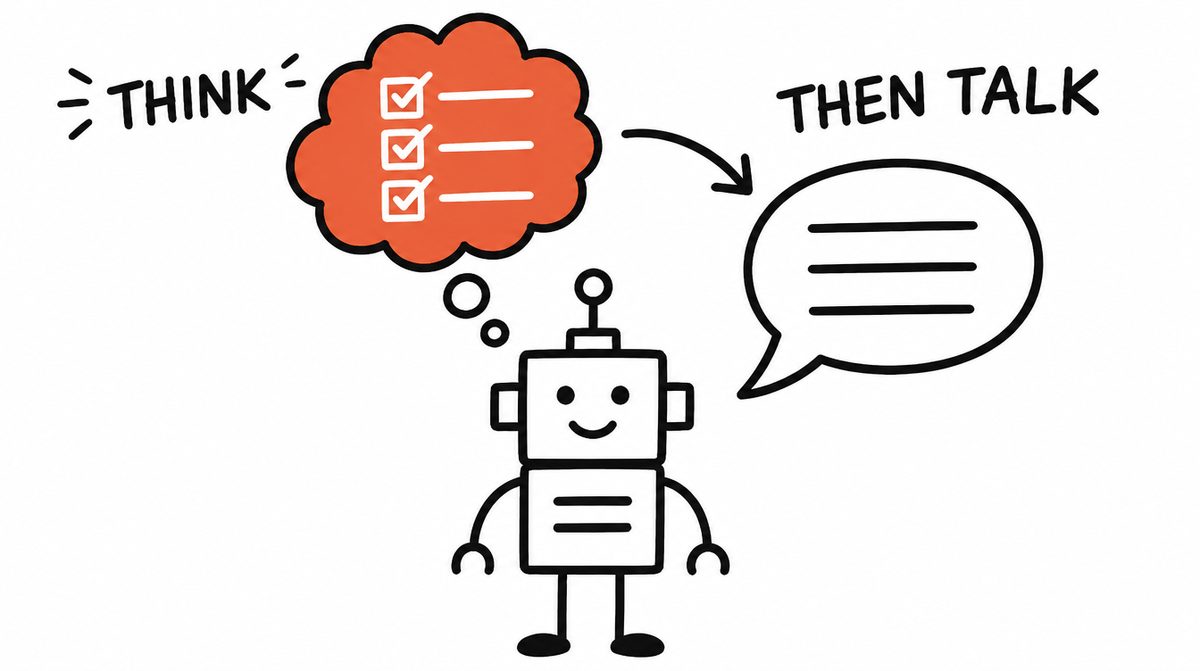
Then, in 2024, it learned to stop and think before it answers.
Work the problem step by step. Check its own work. Then talk.
You know the difference between the kid who shouts the first answer that pops into his head and the kid who shows his work? Same idea.
That's when it got good at math, at code, at the hard questions.
Step two: it can think.
Step Three: Then We Gave It Hands
And then came the biggest one of all.
We gave it hands.
Not real hands. Tools. It's not just talking anymore. It can use a computer. Open apps. Click the buttons. Make the call. Write the software and run it.
Think about that. The smartest thing we've ever built. And now it can actually do stuff.
So how does a chatbot answer a phone? It doesn't. An AI that can talk and think picks up the phone, because the phone is one of its hands.
That's step three. And it's the one almost nobody knows about yet.
Let Me Show You What Hands Means
On the afternoon of the Nov 9 talk, at my house, I opened Claude Code (the version of Claude that can work right on my computer) and asked it one thing:
"Show me everything on my home network. Read-only. Don't log in to anything."
(Your home network is just everything hooked up to your Wi-Fi.)
Nobody typed a command. It figured out how to look, on its own.
About forty-two devices. My TVs. The speakers. A mystery gadget from Whirlpool. Smart plugs that turned out to be tiny computers.
A year ago that took an IT person and an afternoon. It took Claude about four minutes.
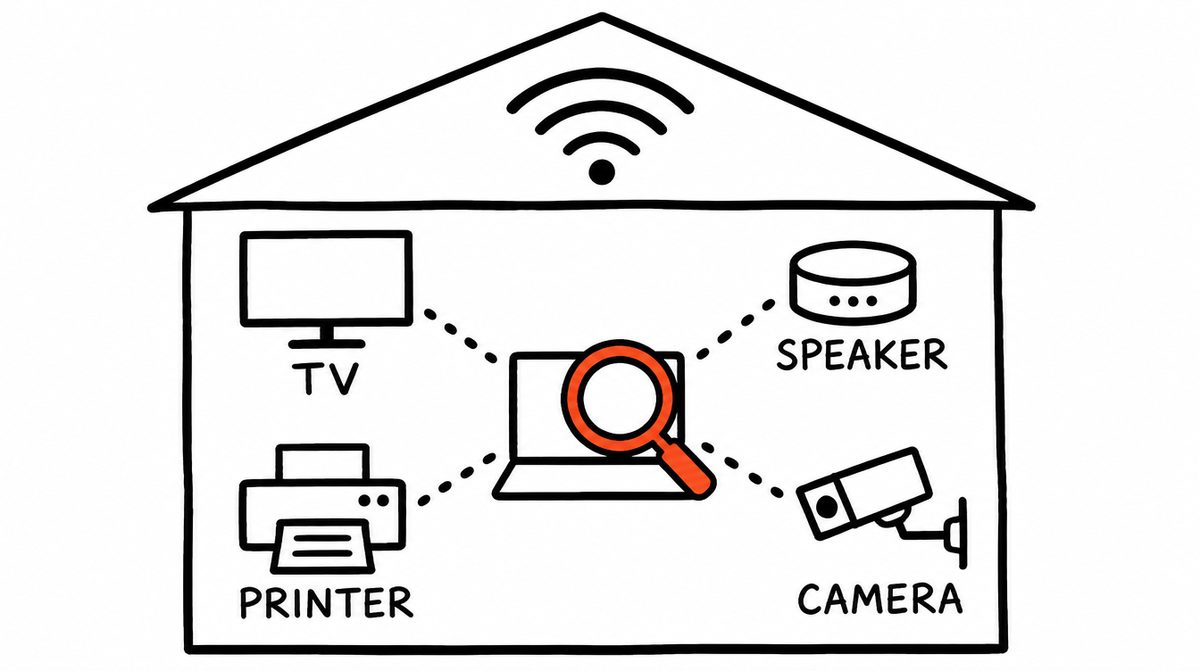
Another one. We were on vacation at a friend's house in Hilton Head, and the TV upstairs wouldn't work.
I didn't call anybody. I opened Claude Code. It went onto the network, found the TV, and fixed it.
On vacation.
One of the people who builds these AI assistants tells a story like this too. He sent his assistant a voice message, which it was never built to understand. It figured out on its own how to listen to it, and wrote back.
A chatbot gives up. AI with hands figures it out.
And one more, close to home. I filmed Dr. McCray, the Colts' team chiropractor, walking out at a Colts game. DaVinci Resolve, the video software, cut the clips. Claude posted them to our site.
I didn't touch an editing timeline.
And here's the part that still gets me. I don't type any of this. I just talk to it.
If You Can Say It, It Can Build It
Here's what hands means for you, even if you never touch a network.
At the event, I said this out loud into my laptop, for a brow studio:
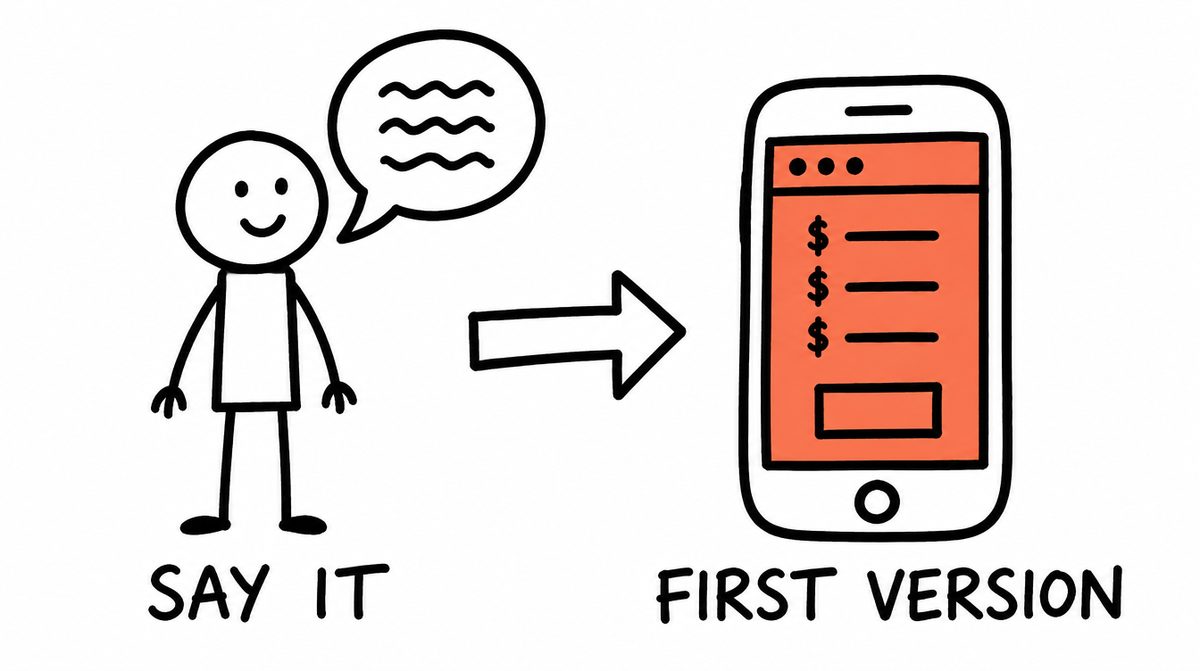
"Build me a simple price calculator for an eyebrow threading business. Services: eyebrows, upper lip, full face. Let a customer tick the boxes, show the total, and add a button that says 'Text me to book.'"
It built it, right there on the screen. I clicked a couple of boxes and the total changed.
That's a working tool. I didn't write any code. I said what I wanted.
If you can say it clearly, AI can build you a first version. Often in minutes.
Before You Hand It Anything: Four Questions
Now, hands is the part where a smart owner leans back and says, "Okay. Wait a second."
Good. That's the right instinct.
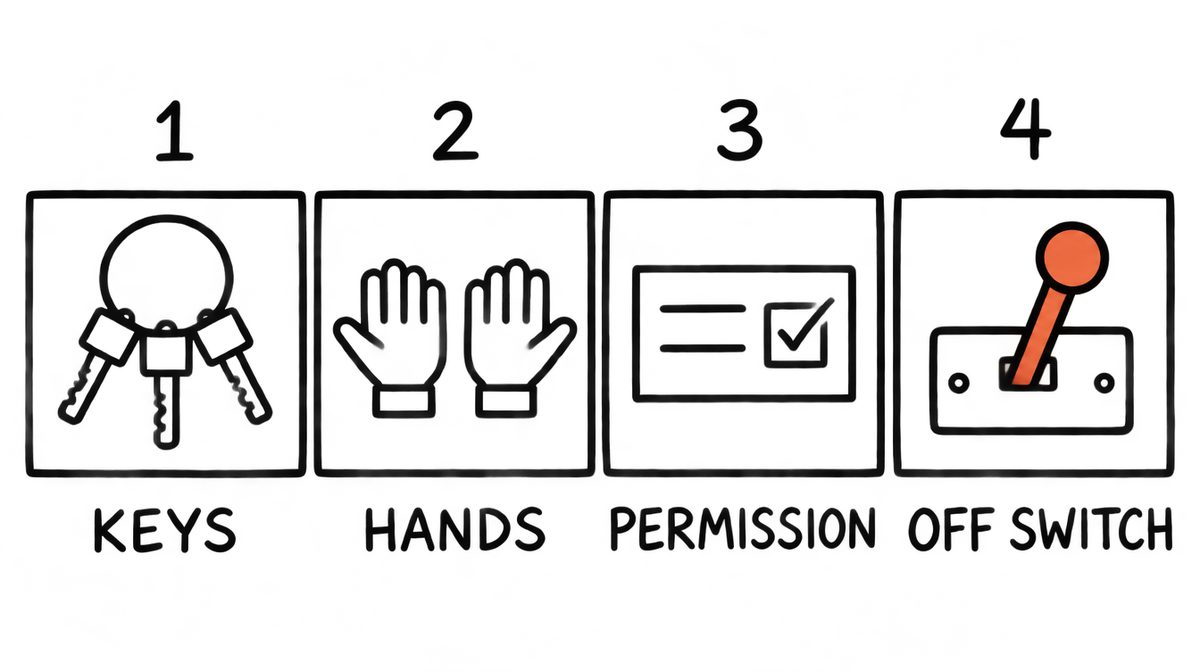
Talking can't hurt your business. Doing can. So before you hand AI anything that matters, ask yourself four questions.
1. The keys. What can it see?
2. The hands. What can it do?
3. The permission slip. What needs my OK?
4. The off switch. How do I check it, and how do I turn it off?
If that sounds familiar, it should. It's the same stuff you settle with a new hire on day one. Which keys do they get? Which jobs are theirs? What do they run by you first? And how would you know if something went sideways?
Now go back to that pizza shop phone, the demo we built.
It can see the menu and the hours. Not the bank account.
It can take an order. It can't give refunds.
Anything weird, it says, "Let me check with the owner."
Every call is written down.
And one switch turns it off.
That's how you trust it. Not by hoping. By deciding, ahead of time, what it can see and what it can touch.
You already watched me do this, by the way. "Read-only. Don't log in to anything." That was a permission slip, before Claude ever looked at my network.
And here's the rule we gave the whole room on Nov 9, which works for any AI chat: no client names, no account numbers, no passwords in there. Ever. Keep the private stuff out.
Steal This
The four questions (ask before AI touches anything that matters)
- Keys: What can it see? (The menu, yes. The bank account, no.)
- Hands: What can it actually do? (Take an order, yes. Give a refund, no.)
- Permission slip: What has to come to me first? (Anything weird: "Let me check with the owner.")
- Off switch: How do I check its work, and how do I shut it off? (Every call written down. One switch.)
If you can't answer all four, it's not ready for real work yet.
Back To That Phone
So, Friday night. The pizza shop phone rings again.
The owner's hands are still covered in flour. Same as last time.
But now you know what picks up. Something that can talk, can think, and has hands. It sees the menu, not the bank account. It checks with him on anything weird. And he can flip it off any time.
We gave it hands, so his can stay in the dough.
Curious what hands could do in your business, safely? Grab 15 minutes with me at 2guysandagenie.com/book and we'll run your four questions together. Or text GENIE to (317) 751-2693.
Next up: No. 9, "Day 29." Going from talking to AI to AI with hands took about three years. Here's why the next few years will feel faster than the last few hundred.